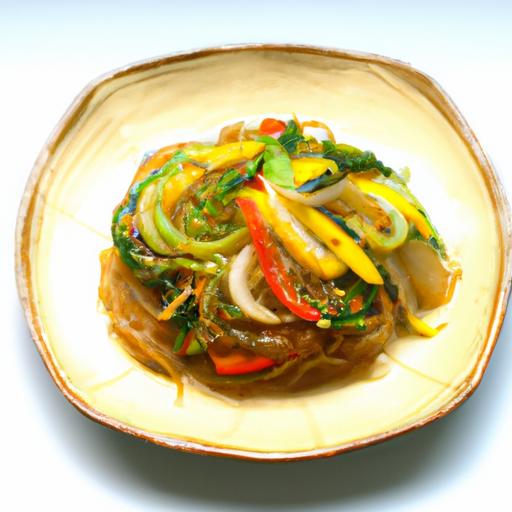

In the vibrant tapestry of Korean cuisine, few dishes capture the eye and palate quite like japchae. This dazzling medley of translucent glass noodles, kissed by sesame oil and tossed wiht a rainbow of fresh vegetables, is much more than just a feast for the senses-it’s a culinary party steeped in history and culture. “Japchae Unveiled: Korean Glass Noodles in Colorful Harmony” invites you to journey beyond the plate, exploring the origins, artistry, and irresistible flavors that transform simple ingredients into a dish that embodies balance, beauty, and tradition. Join us as we unravel the story behind each glistening strand and uncover why japchae continues to captivate hearts around the world.
The Art of Japchae: Balancing Texture and flavor in every Bite
japchae Unveiled: Korean Glass Noodles in Colorful Harmony brings to life a dish where fresh vegetables and silky glass noodles dance effortlessly in a symphony of textures and flavors. Originating from the royal courts of Korea, this savory, sweet, and subtly umami stir-fry is an inviting canvas for a kaleidoscope of colors and tastes that awaken every sense. My love affair with japchae began on a brisk autumn afternoon in Seoul,where the perfect bite featured the satisfying snap of crisp spinach beside the tender,slippery noodles glazed in a luscious soy-sesame sauce. This recipe captures that vibrant harmony, making the art of japchae approachable and wonderfully rewarding for home cooks eager to bring a touch of Korean tradition to their table.
Prep and Cook Time
- Preparation: 25 minutes
- Cooking: 15 minutes
- Total Time: 40 minutes
Yield
serves 4 as a satisfying main or 6 as a colorful side dish
Difficulty Level
Medium – Ideal for eager cooks ready to master multiple components with confidence
Ingredients
- 200g Korean sweet potato glass noodles (dangmyeon)
- 2 cups fresh spinach,washed and blanched
- 1 medium carrot,julienned
- 1 red bell pepper,thinly sliced
- 4 shiitake mushrooms,stems removed and thinly sliced
- 3 green onions,sliced into 2-inch pieces
- 3 garlic cloves,minced
- 3 tablespoons toasted sesame oil
- 3 tablespoons soy sauce (preferably Korean soy sauce for authenticity)
- 1 ½ tablespoons brown sugar
- 1 tablespoon toasted sesame seeds
- 1 tablespoon vegetable oil (neutral-flavored)
- Black pepper,freshly ground to taste
Instructions
- Prepare the noodles: Soak the dry glass noodles in warm water for 20 minutes until softened. Drain, then boil in rapidly boiling water for 6-7 minutes until chewy yet tender. Rinse under cold water and drain well. Toss noodles with 1 tablespoon sesame oil to prevent sticking.
- Sauté the vegetables: Heat vegetable oil in a large skillet over medium heat. Add minced garlic and stir until fragrant, about 30 seconds.Add julienned carrots and sliced shiitake mushrooms first, sauté for 3-4 minutes until slightly softened. then add red bell peppers and cook 2 more minutes, keeping vegetables crisp and vibrant. Add blanched spinach and green onions last, stirring gently to combine.
- Make the sauce: In a bowl, whisk together soy sauce, brown sugar, and 2 tablespoons toasted sesame oil until sugar dissolves. Adjust the balance,ensuring the glaze strikes a perfect harmony of sweet and savory – the hallmark of japchae’s flavor profile.
- Combine all elements: Add the prepared noodles to the skillet with vegetables. Pour the sauce over the mixture and gently toss everything using tongs or chopsticks. Sauté on medium-low heat for 3-4 minutes, allowing the noodles to absorb the flavorful glaze and the dish to unify-take care not to break the noodles.
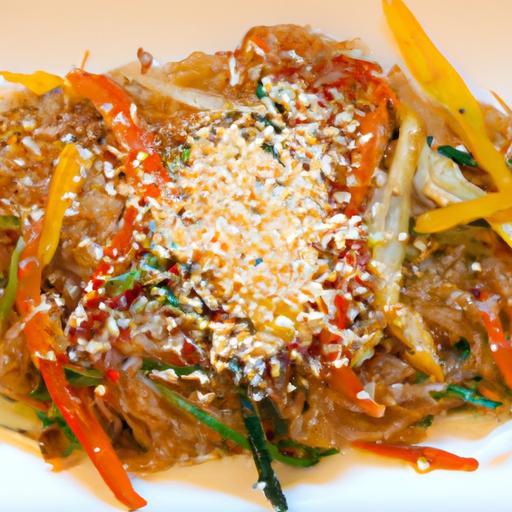
- Final touches: Season with freshly ground black pepper and sprinkle sesame seeds evenly on top. Give a gentle final toss and turn off the heat.
chef’s Notes
- Freshness is key: Use fresh, vibrant vegetables to ensure crisp bite contrasts beautifully with soft noodles.
- Make it vegetarian-friendly: Swap shiitake mushrooms with oyster or king trumpet mushrooms for a meaty texture without meat.
- Noodle texture tip: Sweet potato starch noodles tend to overcook quickly. Always check for that perfect chewy texture-al dente is best.
- Make ahead: Japchae tastes wonderful warm or at room temperature, making it perfect for preparing ahead and enjoying later.Store in an airtight container and reheat gently to preserve noodle texture.
Serving Suggestions and Pairings
For a stunning presentation, arrange japchae on a large serving platter, garnished with additional sesame seeds and thinly sliced fresh red chili for a hint of color and spice. Pair this dish with lightly pickled daikon radishes or kimchi for added crunch and tang.A side of steamed white rice or a bowl of mild Korean egg soup balances the sweet-savory richness. Finish with a drizzle of extra toasted sesame oil and a sprinkling of chopped scallions to revive the fresh aroma before serving.

| Nutrient | Per Serving |
|---|---|
| Calories | 280 kcal |
| Protein | 6 g |
| Carbohydrates | 50 g |
| Fat | 5 g |
You can explore more vibrant Korean dishes in our Korean recipes collection for a full culinary journey.
For deeper insights into the nutritional benefits of sweet potato starch noodles, check out this resource from Healthline.
Q&A
Q&A: Japchae Unveiled – Korean Glass Noodles in Colorful Harmony
Q1: What exactly is Japchae?
A1: Japchae is a vibrant Korean dish featuring chewy glass noodles made from sweet potato starch, stir-fried with a rainbow of vegetables and savory seasonings. It’s like an edible celebration of texture and color, blending sweet, salty, and umami flavors in perfect harmony.
Q2: What makes the glass noodles in Japchae so special?
A2: The glass noodles, or “dangmyeon,” have a translucent, slightly glossy appearance and a unique chewy texture that sets them apart from regular wheat noodles. Their subtle flavor acts as a blank canvas, soaking up the savory soy-based sauce and the essence of the vegetables and meat.
Q3: Which vegetables are traditionally used in Japchae?
A3: Japchae is known for it’s colorful medley of vegetables, typically including julienned carrots, spinach, thinly sliced onions, shiitake mushrooms, and sometimes sweet bell peppers. Each adds a burst of color, crunch, and nutritional goodness, contributing to the dish’s signature vibrant look.
Q4: Is Japchae usually served hot or cold?
A4: One of Japchae’s charms is its versatility. It can be served warm, fresh from the pan, making it a comforting entrée, or chilled as a refreshing side dish at room temperature, especially popular at festive gatherings.
Q5: Are there any common protein options in Japchae?
A5: Yes! Japchae often features thinly sliced beef or chicken marinated in soy sauce and garlic, lightly stir-fried to add savory depth without overpowering the dish. For a vegetarian twist, tofu or egg strips are excellent protein alternatives that blend seamlessly with the noodles and veggies.
Q6: How is Japchae seasoned to achieve its distinctive flavor?
A6: The magic lies in a balanced sauce of soy sauce, sesame oil, sugar, and garlic.This combination sweetens, salts, and oils the noodles and vegetables in a way that enhances their natural flavors while maintaining a light, fragrant finish.
Q7: Can Japchae be adapted for special diets?
A7: Absolutely! japchae is inherently gluten-free if gluten-free soy sauce is used, and it easily adapts to vegetarian or vegan diets by swapping out meat for mushrooms, tofu, or more vegetables. Its colorful integrity stays intact no matter the variation.
Q8: What occasions are best for enjoying Japchae?
A8: Japchae is a beloved dish for celebrations and everyday meals alike.In korea, it often graces holiday tables and special events, symbolizing abundance and harmony – much like the vibrant noodles weaving through a tapestry of fresh ingredients.
Q9: How do you prevent Japchae noodles from clumping together?
A9: After boiling, the noodles should be rinsed under cold water and drained thoroughly to remove excess starch.Tossing them lightly with sesame oil before stir-frying helps keep each strand glossy and separate, contributing to the dish’s elegant texture.
Q10: What’s the best way to present Japchae for maximum visual appeal?
A10: Think of Japchae as edible art – arrange the noodles in a gentle mound, then scatter the colorful vegetable strips and protein on top or around the edges. Garnishing with toasted sesame seeds and a few fresh spinach leaves adds a final touch of earthy shimmer and freshness.
In Conclusion
As the vibrant strands of japchae weave together sweet, savory, and textural notes, they tell a story far richer than just a meal. This colorful harmony of Korean glass noodles not only delights the palate but also offers a glimpse into a culinary tradition steeped in history and cultural nuance. Whether enjoyed at a festive gathering or recreated in your own kitchen, japchae invites you to savor more than just food-it invites you to experience a lively dance of flavors and textures that continues to captivate and inspire. So next time you twirl those translucent noodles, remember that you’re partaking in a timeless symphony of taste, color, and heritage.